 Nami Island Korea
Home › Guides › Chuncheon Dakgalbi: What It Is and Where to Eat It Near Nami Island
Chuncheon Dakgalbi: What It Is and Where to Eat It Near Nami Island
Chuncheon Dakgalbi is spicy stir fried chicken cooked in a big pan with rice cakes, sweet potato and cabbage, and it was born in Chuncheon, the lake city about an hour east of Seoul that also administers Nami Island.
Quick answer Quick answer: what is Chuncheon dakgalbi and why eat it near Nami Island
Chuncheon dakgalbi is chicken thighs stir fried in a gochujang chilli sauce with rice cakes, cabbage, sweet potato and onion in a large pan. Chuncheon, about an hour east of Seoul, is the dish's home city, and Nami Island belongs to Chuncheon even though the ferry leaves from nearby Gapyeong. A day trip plus an early dakgalbi dinner is one of the most rewarding food pairings in Gangwon province.
Key takeaways
- Plan the trip on our Nami Island homepage, where ferries, tickets and transport are laid out.
- Compare day options on the Nami Island day trip page.
- Add a garden stop with the Nami Island Garden of Morning Calm tour.
- Short on time? The Nami Island shuttle bus gets you there and back from Seoul.
What is Chuncheon dakgalbi?
Chuncheon dakgalbi is spicy chicken stir fried at the table in a wide pan with vegetables and rice cakes, and it originated in Chuncheon, a lake city of Gangwon province.
The name trips people up because galbi usually means grilled ribs. Here it means something else entirely.
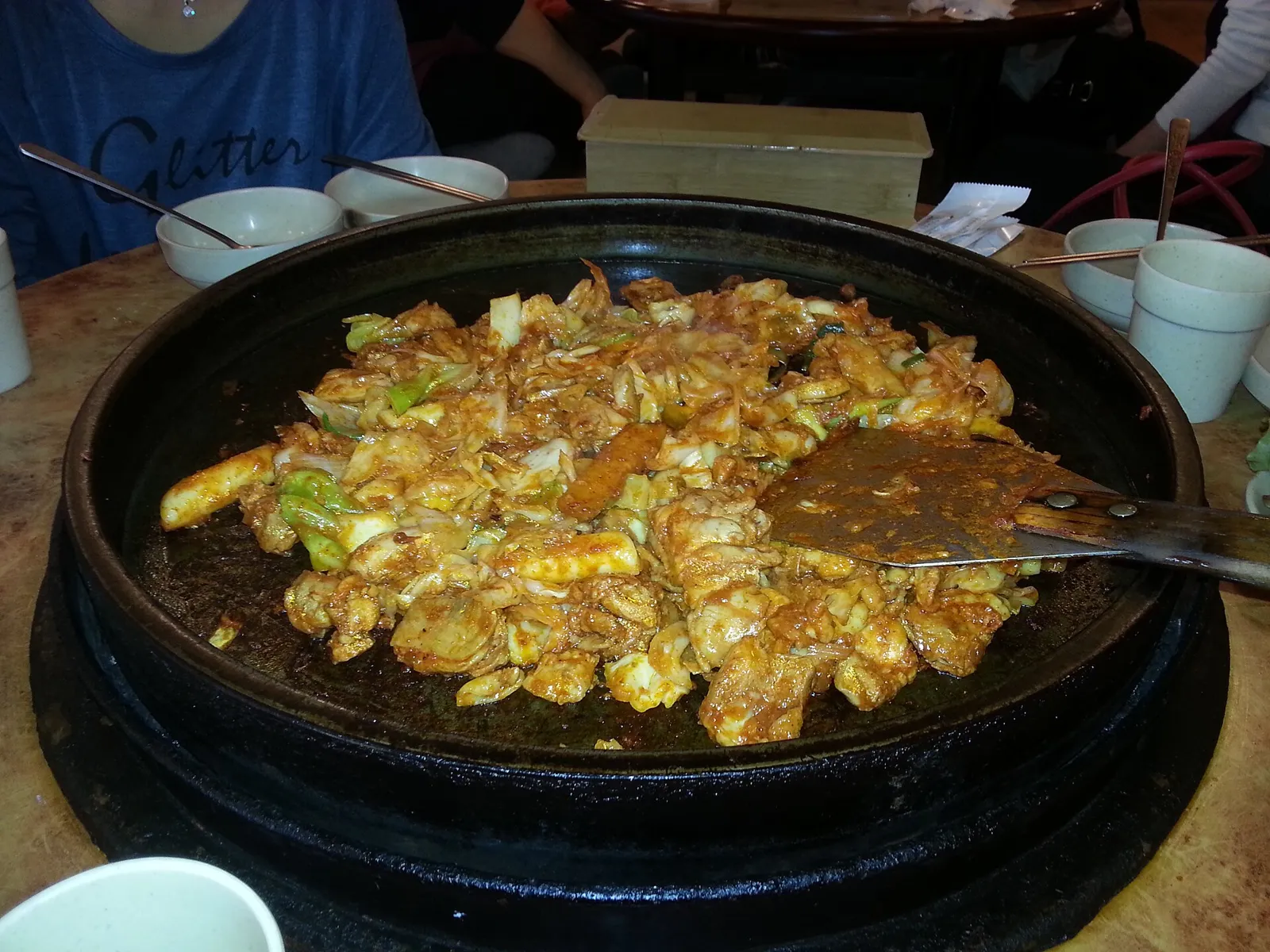
Dakgalbi stir-fried on a large iron pan at the table. Photo: Mimmodipalma, CC BY-SA 4.0, via Wikimedia Commons
The dish in one look
A server brings a large pan, often cast iron, filled with chicken in a red chilli sauce. Rice cakes, sweet potato, cabbage, onion and perilla leaves cook down with it in front of you. Dak galbi is spicy chicken stir fried in that big pan, and the whole table shares one pan.
The sauce is gochujang based. Recipes combine gochujang, gochugaru chilli flakes, soy sauce, sugar, honey, mirim, garlic, curry powder and sesame oil. The curry powder surprises most first time eaters and gives Chuncheon style sauce its slightly earthy depth. Before marinating, the chicken is often soaked in milk for 10 to 15 minutes to soften the smell and texture.
| Element | What you get |
|---|---|
| Protein | Chicken, usually thigh, bone-in or boneless |
| Sauce | Gochujang, gochugaru, soy, sugar, honey, mirim, garlic, curry powder, sesame oil |
| Vegetables | Cabbage, sweet potato, onion, perilla leaves |
| Starch | Chewy rice cakes called tteok |
| Finish | Rice fried into the leftover sauce at the end |
What does dakgalbi mean in Korean?
Dak means chicken and galbi means ribs, but dakgalbi contains no chicken ribs, the name came from chicken substituting pork ribs that most people could not afford after the war.
The name is a historical joke that stuck.
Chicken that stood in for ribs
Galbi on a Korean menu means marinated beef or pork ribs, a expensive cut. After the Korean War, chicken replaced those ribs in Chuncheon because it was cheap and available. Locals called the result seomin galbi, meaning commoners galbi.
The dish started as a budget meal for soldiers and students in the 1960s. Chuncheon is a lakeside city about an hour east of Seoul, and chicken farming became a lifeline there after the Korean War ended in 1953. Cheap local chicken plus cheap vegetables turned into a city signature that now draws visitors from across the country.
Chuncheon Day Trip Itinerary: Dakgalbi Street and Soyanggang Skywalk
Shows the dakgalbi street in Chuncheon and other stops in town. Third-party video by BrieVco. This site did not shoot it and has no relationship with the creator.
What is the difference between dakgalbi and buldak?
Dakgalbi is chicken stir fried with vegetables and rice cakes in a milder gochujang pan sauce, while buldak is fire chicken, a dish built around extreme chilli heat rather than the pan meal, and this page's sources describe dakgalbi in detail without covering buldak further.
The Korean food boom exported both names, so travellers confuse them.
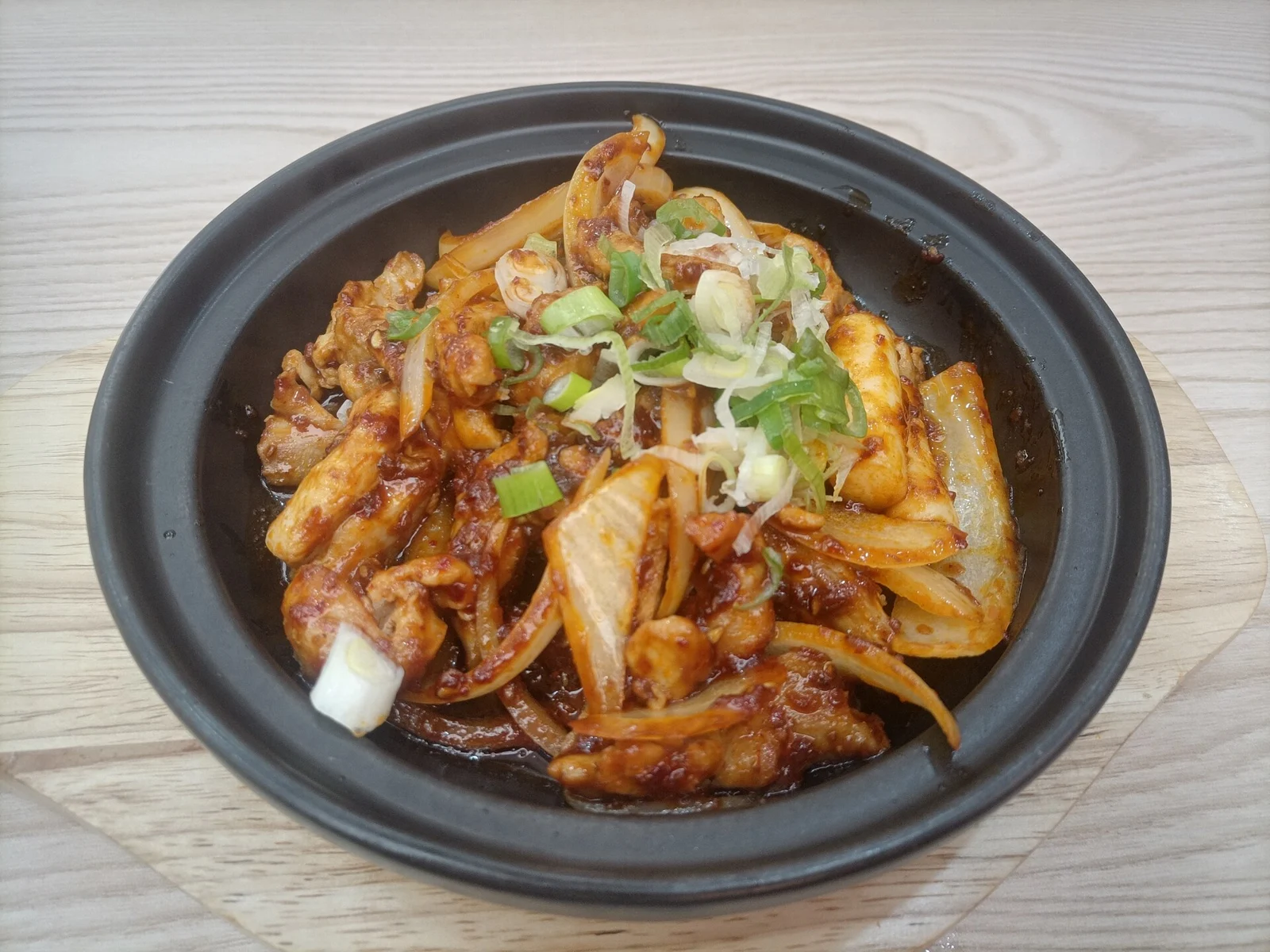
A plated portion of spicy stir-fried dakgalbi chicken. Photo: Fumikas Sagisavas, CC0, via Wikimedia Commons
Two different chickens
Buldak translates as fire chicken and is famous for punishing spice levels, usually grilled or braised chicken drenched in a fierce chilli sauce. Dakgalbi is a communal pan dish where the heat comes from a balanced gochujang marinade, softened by cabbage, sweet potato and rice cakes.
For a traveller the practical difference is the experience. Dakgalbi is a sit down, cook at the table, share one pan meal with a fried rice finale. Buldak is a single spicy dish, often eaten with noodles or alone. If you want a full dinner and a story to tell, dakgalbi is the Chuncheon choice.
Where to eat dakgalbi near Nami Island?
The nearest dakgalbi scene to Nami Island is Chuncheon itself, the city the island belongs to, reached from Gapyeong by train in about 20 to 28 minutes.
Nami Island belongs to Chuncheon, Gangwon, but the ferry leaves from Gapyeong Wharf in Gapyeong, Gyeonggi Province. That geography is your food opportunity.
Why the island points you to Chuncheon
Nami Island sits administratively inside Chuncheon, so the dish that made Chuncheon famous is the natural meal either before or after your island visit. Chuncheon is about an hour east of Seoul, and the island ferry port at Gapyeong sits on the same rail line.
The cleanest plan is to eat in Chuncheon after the island. From Gapyeong Station, the ITX-Cheongchun to Chuncheon takes about 20 minutes and the Gyeongchun Line about 28 minutes, according to the island's access page. A late afternoon island visit, then an early dakgalbi dinner in Chuncheon, then a train back to Seoul fits into one long day.
If you would rather keep the day simple, take a guided option and handle food on your own in Chuncheon before joining a group. The Nami Island day trip page explains the standard route from Seoul, and the Nami Island shuttle bus page covers the cheapest fixed time option. The Nami Island private tour page is the flexible choice if you want your own timing for a dinner stop.
| Plan | How dakgalbi fits |
|---|---|
| Train day trip | Ferry at Gapyeong, then 20 to 28 minutes by train to Chuncheon for dinner |
| Guided tour | Eat in Chuncheon before or after joining your pickup point |
| Self drive | Park at the wharf, island in the morning, drive into Chuncheon for lunch |
Source: Nami Island.
Tours That Fit
Pair the dish with a day on the island and in the gardens of Gangwon.

Nami Island and Garden of Morning Calm Tour from Seoul, Rail Bike Optional
The classic Gapyeong day: three and a half free hours on Nami, the Garden of Morning Calm and an optional rail bike ride. Nami and garden tickets are in the price.
- Category
- Nami and the Garden of Morning Calm
- Cancellation
- Free cancellation 24h
- Operator
- TOURSTORY Korea
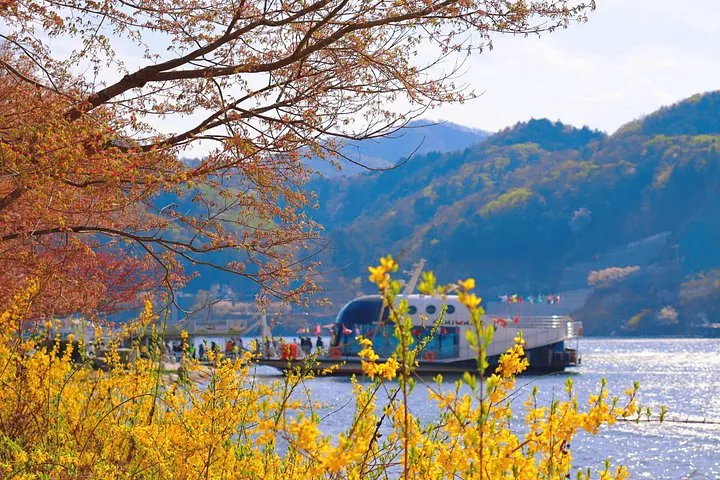
Nami Island, Petite France and Italian Village and Garden of Morning Calm Tour
Nami Island, the French and Italian theme villages at Petite France and the Garden of Morning Calm in one day, with all three tickets in the price.
- Category
- Nami and Petite France
- Cancellation
- Free cancellation 24h
- Operator
- TOURSTORY Korea
Seoul to Nami Island Round-Trip Shuttle Bus
Just the bus: a round trip from central Seoul to the Nami Island wharf, no guide and no ticket. The cheapest way there without changing trains.
- Category
- Shuttle bus only
- Cancellation
- Free cancellation 24h
- Operator
- TOURSTORY Korea
How do you get to Chuncheon from Nami Island or Seoul?
From Gapyeong, the station nearest the Nami ferry, Chuncheon is about 20 minutes by ITX-Cheongchun or 28 minutes by Gyeongchun Line, and from central Seoul the same line takes roughly 50 minutes to Gapyeong.
The Gyeongchun Line is the thread that ties Seoul, Gapyeong and Chuncheon together.
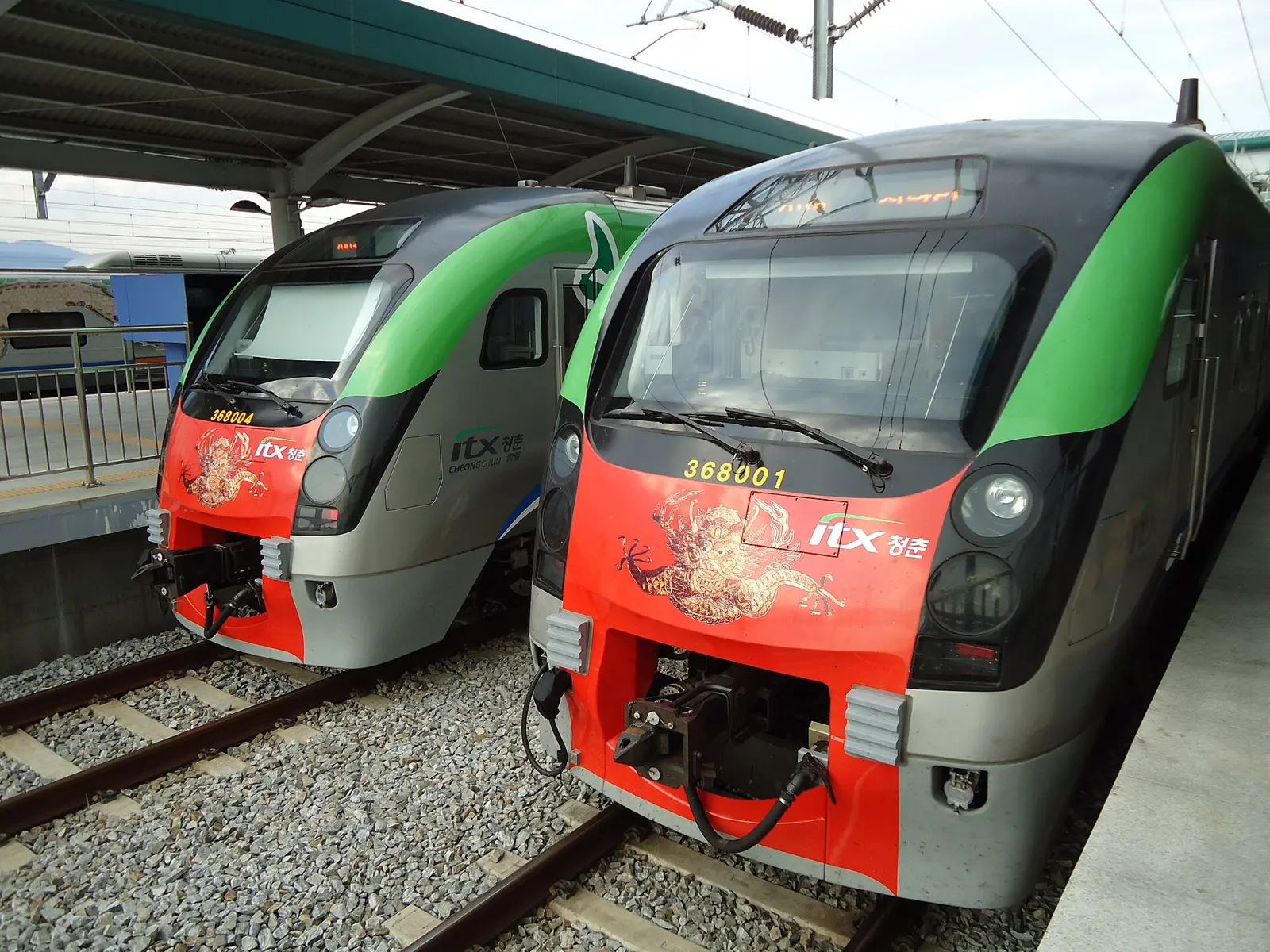
Two ITX-Cheongchun trainsets waiting at a platform. Photo: Korail2012, CC BY-SA 3.0, via Wikimedia Commons
The train math
Gapyeong Station to the wharf is about 1.5 km, roughly 20 minutes on foot or 5 minutes by the No. 10-4 bus or a taxi. So the loop from Seoul looks like this: train to Gapyeong, short hop to the wharf, ferry to the island, ferry back, bus or taxi to the station, train on to Chuncheon, dakgalbi dinner, train home.
From Yongsan in Seoul, the ITX-Cheongchun to Gapyeong takes about 60 minutes, and from Cheongnyangni about 42 minutes. The Gyeongchun Line from Sangbong to Gapyeong takes about 50 minutes and is the cheaper subway fare option. Chuncheon's dakgalbi street district sits within taxi distance of Chuncheon Station, and specific restaurant addresses are not stated in this page's sources.
| Leg | Time |
|---|---|
| Cheongnyangni to Gapyeong, ITX-Cheongchun | About 42 minutes |
| Yongsan to Gapyeong, ITX-Cheongchun | About 60 minutes |
| Sangbong to Gapyeong, Gyeongchun Line | About 50 minutes |
| Gapyeong to Chuncheon, ITX-Cheongchun | About 20 minutes |
| Gapyeong to Chuncheon, Gyeongchun Line | About 28 minutes |
| Gapyeong Station to the wharf | 20 minute walk or 5 minutes by bus or taxi |
Source: Nami Island.
Where is Chuncheon Dakgalbi Street?
Chuncheon's dakgalbi restaurant district is in central Chuncheon, the lake city about an hour east of Seoul, though this page's sources do not print exact street addresses.
Ask any Chuncheon taxi driver for dakgalbi street and you will be understood.
How to find the restaurants
Chuncheon is a compact lakeside city and the dish's restaurant rows sit in the centre, clustered close enough that many visitors simply walk between them. Exact addresses of individual restaurants are not stated in this page's sources, so the practical method is to take a taxi from Chuncheon Station and say dakgalbi.
Expect the classic setup: a wide pan on the table, staff who cook and cut the chicken for you, and the fried rice finish prepared at your table with the leftover sauce.
What versions of dakgalbi can you order?
The main versions are the classic pan, cheese dakgalbi which is currently the most popular, and sutbul dakgalbi, a chargrilled take with a different taste.
Order by style, not just by restaurant.
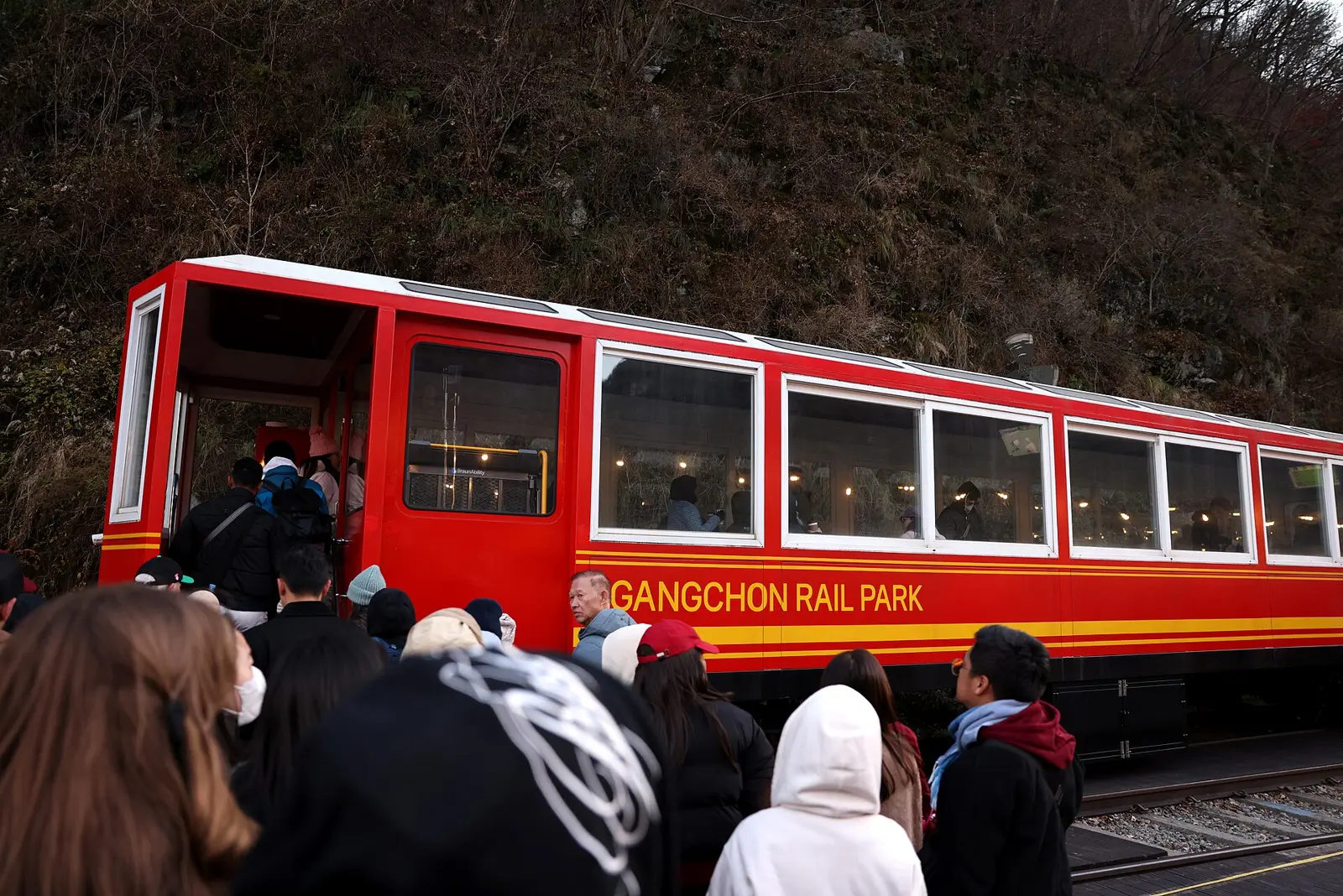
Visitors board a red Gangchon Rail Park carriage. Photo: Gage Skidmore, CC BY-SA 4.0, via Wikimedia Commons
Classic, cheese and chargrilled
Classic dakgalbi is the pan dish described above, shared by the table. Cheese dak galbi lets you dip the cooked chicken in melted cheese, and it is the most popular version right now in Chuncheon. Sutbul dakgalbi is the chargrilled version, cooked over direct fire, with a different taste from the pan style.
Some restaurants offer bone-in chicken slightly cheaper than boneless, so ask when you order. Boneless is easier for travellers still building chopstick confidence.
| Version | What makes it different |
|---|---|
| Classic pan | Everything cooked together in a large pan at the table |
| Cheese dakgalbi | Dip the finished chicken in melted cheese, the current favourite |
| Sutbul dakgalbi | Chargrilled over fire, a different taste |
| Bone-in vs boneless | Bone-in is often slightly cheaper, boneless is easier to eat |
How does a dakgalbi meal finish?
At the end of the meal rice, kimchi, sesame oil and seaweed are stir fried into the leftover sauce to make fried rice, and the classic side pairing is makguksu, a cold buckwheat noodle dish.
The best part of dakgalbi comes after the chicken is gone.
Fried rice in the same pan
Do not stop eating when the chicken finishes. Staff add a bowl of rice, plus kimchi, sesame oil and seaweed, straight into the pan. The red sauce left behind turns into fried rice scraped from the pan base, and this finish is the reason locals order less chicken than they think they need.
Order makguksu alongside. Makguksu is a cold buckwheat noodle dish, a Chuncheon specialty, and it pairs with hot spicy dakgalbi as the cool counterpoint. One hot pan, one cold bowl of noodles, is the local table at its best.
When is the Chuncheon dakgalbi festival?
Every October Chuncheon hosts the Chuncheon Makguksu and Dakgalbi Festival at 245 Sports town-gil, Chuncheon-si, Gangwon-do.
The city celebrates its two signature dishes together.
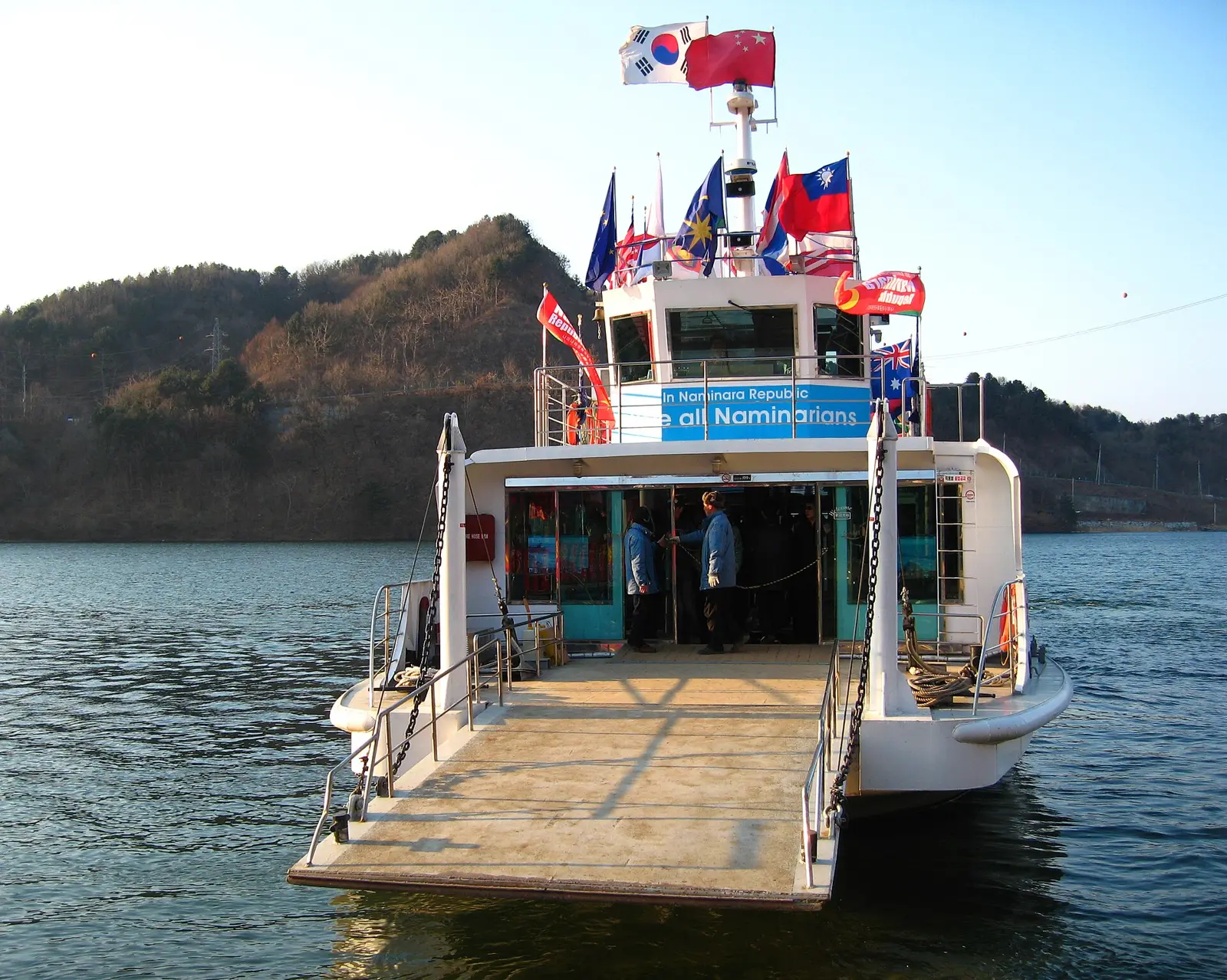
The ferry that carries visitors across the water to Nami Island. Photo: Minseong Kim, CC BY-SA 4.0, via Wikimedia Commons
A festival for both dishes
The Chuncheon Makguksu and Dakgalbi Festival runs every October at 245 Sports town-gil in Chuncheon, pairing the cold buckwheat noodles with the spicy chicken pan in one event. If your Nami Island trip falls in October, the festival makes an easy add on after the island, since Chuncheon is one short train ride from Gapyeong.
Festival entry prices and opening hours are not stated in this page's sources, so check locally before you go.
Where to eat dakgalbi in Seoul or outside Korea?
Dakgalbi restaurants exist across Seoul and the dish has travelled abroad, with one named example in Los Angeles, Chuncheon Dakgalbi Donghae Makguksu at 3601 W 6th St, which offers delivery and takeout.
You do not have to reach Gangwon to taste the dish, though Chuncheon is still the reference point.
Seoul and the diaspora
Seoul has dakgalbi restaurants across the city, and the sources on this page discuss Seoul as a place to eat the dish without naming specific restaurants, so ask at your hotel or use a maps app for current options. In Los Angeles, Chuncheon Dakgalbi Donghae Makguksu at 3601 W 6th St offers delivery and takeout, one example of how the Chuncheon style has travelled.
If you are flying home soon and want one last pan, Seoul works. If you have a full day, take the train to Chuncheon and eat where the dish was invented by soldiers and students in the 1960s.
Chuncheon Dakgalbi FAQ
What is dakgalbi made of?
Chicken in a gochujang sauce with rice cakes, sweet potato, cabbage, onion and perilla leaves, stir fried together in a large pan, per My Korean Kitchen.
Is dakgalbi very spicy?
It is spicy but balanced. The gochujang marinade is softened by cabbage, sweet potato and rice cakes, and the cheese version cools it further.
Can I visit Nami Island and eat dakgalbi on the same day?
Yes. Chuncheon is about 20 to 28 minutes by train from Gapyeong Station, which is about 1.5 km from the Nami ferry wharf, so dinner in Chuncheon after an island visit works, per the Nami Island access page.
What should I order with dakgalbi?
Makguksu, a cold buckwheat noodle dish that pairs with hot spicy dakgalbi, and ask for the fried rice finish when the chicken runs out.
How much does Nami Island cost if I combine it with a dakgalbi trip?
Regular admission with the round-trip regular ferry is KRW 19,000 per adult, per the island ticket page, and tours such as the Garden of Morning Calm combo start at $54 per person.
Is there a shuttle that makes the trip easier?
Yes, the Seoul to Nami Island round-trip shuttle bus is $23.81 per person and runs from Hongik Univ Station, Myeongdong and DDP, returning from the island at 16:30.
More Guides
- When Is the Best Time to Visit Nami Island?
Plan the best time to visit Nami Island in 2027: peak foliage mid-October to early December, ferries 08:00 to 21:00, and tips to beat crowds.
- How Long to Spend in Nami Island?
Plan 2027 right: 3 to 4 hours on Nami Island, a 10 to 12 hour day from Seoul. See time budgets, ferry times and sample plans.
- How Much Does Nami Island Cost?
Nami Island costs 19,000 KRW for adults with ferry included, open 08:00 to 21:00. See full 2027 prices, extras and day trip budgets.